Mar 18, 2010

What's so Radical about Homemaking?

#2 in a series of responses to Globe&Mail comments
I'm not sure that reverting to traditional, out dated ways of life is necessarily radical.Its wonderful if you can do it but I don't know that I'd call it all that radical.
Now if you insisted on doing so entirely in a vinyl pink bodysuit that might be radical.
- "BC Philosopher's" comment on the Globe and Mail article

We're not doing anything new here. There's nothing radical about wanting to be connected to our food sources, live slower, spend out time engaged directly in activities that nurture our bodies and souls and communities. As another reader commented, "If that is radical, then so is watching television or wearing a sweater or getting a library card."

What's different from our grandparents' life is that we're coming back to it. Choosing to forgo the trappings of consumerism makes it much more Joyful than if we just couldn't afford them; much like deciding to go on a fast is nothing like not being able to get enough to eat. In this regard, "Teapots" was somewhat correct in her comment that this "reminds me of Tolstoy walking around his estate in sackcloth pretending he was a peasant."

I would argue that while our life is "traditional", it's not "outdated." While we wake up to the timeless crow of rooster, we also get to enjoy modern conveniences - we have not gone Amish and given up power tools, the station wagon and trailer, the smoothie blender, the high-thread-count bamboo bedsheets. The internet and easy transport options give us many more options for secondary income, and let us remain connected and involved in the wider world. There are homesteaders who choose to go into the woods with a few hand-tools and re-live Little House on the Prairie, but most of us pick and choose from the wide menu of tools and trends that support the path we've chosen.

The main thing that's new about our life is the intentionality, the statement that this is our contribution to environmentalism, social justice and community. Our grandparents took good care of the earth, produced and ate local food, helped their neighbours, etc etc just from a practical and instinctual knowing that it was the best way to live and pass along quality of life to future generations. We've grown up in an age that has lost that natural connection and innate knowledge, so we're having to push ourselves to reclaim and start living it anew.

The only thing radical about remoulding our lives to honour the environment, social justice, community and family is that so many people perceive it as radical.

Mar 16, 2010

The Root of all Evil, and Good

First in a series of responses to Globe&Mail comments
"As usual, the Globe and Mail highlights the high-end version of the idea. Raising all of one's own food must provide a wonderful sense of security, but it's not a realistic prospect for most of us."
- Independently Poor

Money isn't evil or good, it's just a tool as necessary for us "Radical Homemakers" as our hoes and maple tapping spiles. Many comments after today's Globe and Mail article were, like the one above, centred around the economics of our lifestyle choice, and not around the underlying philosophy.

For the record, we are still very tied-in to the money economy. We do not aspire to 100% self-sufficiency. It cost a lot of money to buy these 5 acres. 2/3 of our $3,500 monthly budget goes to the mortgage, Waldorf school tuition and property costs - to cover it, Sarah runs her business full-time and I consult part-time (oh, and we bring in a whopping $50/month from egg and garlic sales). We are planning for a retirement that involves more than just cashing in our relationships - investing in this land and hopefully another piece of rental-income land in the future, instead of the stock market. We pay taxes and enjoy nationalized health care. "Radical Homemaking" (not the term I would have chosen) does not have to mean rejection of money.

It's true that this leg of our family's journey started with enough money to buy this land - due in part to selling a Vancouver home at the height of the boom, and in much larger part due to a lifetime of living frugally, investing wisely (and ethically), and being darn lucky. But we didn't wait to have enough equity to start this life.

The start of our journey, our awakening, came years ago and didn't cost a dime. It started (as I wrote last week) with a simple decision to not use the interstate highway going through town. Then to stop spending money in fast-food chains. Then on to buying locally. So many ways we found to hone our energies in our chosen direction that didn't have to end up here on a farm - that in fact was quite a surprise.

I wish the Globe and Mail had interviewed my friend Steve who walks 40 minutes to work and grows veggies by the sidewalk alongside the well-manicured lawns of his urban neighbours. Or Keira who turned her Vancouver yard into a delicious urban jungle, and helped launch the Sustainable Living Arts School to empower others to cultivate their natural prowess. Or City Farm Boy whose "farm" is a patchwork of unused urban backyards where he tends the land, sharing the bounty with the homeowner. Three examples of friends at three different socio-economic levels, all finding creative ways to live their values in an urban setting.

And for those who think they may find the same Joy we do in tending to the chickens twice a day and chasing cows at 10pm, it is possible to go rural without a lot of equity. There are families out here who rent land, share land in community, intensively farm a half-acre plot, volunteer at a CSA farm (Community Supported Agriculture) or as Woofers. The equity-less renters of our cabin were our full farm partners. There's enough work in the farming community for all who want to make a serious commitment.

But this isn't about homesteading. It's about living a life true to our core values - defined in this "radical homemakers" book as "environmental sustainability, social justice, family and community." It's about being willing to step outside of the parts of mainstream society that don't support those values. Each family has different values, different resources, and different creative solutions. Money is always a factor but doesn't have to be a barrier - it's just one of several ingredients that has to be measured (sometimes creatively) in a successful transition.

Globe and Mail article published

I'm on the front page of the Globe and Mail! Today they published the article about "Radical Homemakers", interviewing me and some other families about how we've re-jigged our lives to center on "environmental sustainability, social justice, community and family."

Over the next week I'll be expanding upon elements that were missed in the excellent article that's just too short for the topic, and responding to the fascinating commentary that has unfolded on the Globe and Mail site. For now, it's just great to see a national newspaper highlight these types of issues on the front page (together with a rock band and two Canadian Paralympic gold medalists). Go, Canada, go!

Mar 12, 2010

A Friend in Need

One of the surprise questions in the Globe and Mail interview was, "So you have to rely on other people a lot?" To be fair, she wasn't attaching judgment to the question, but much of society - our Western society, at least - would consider this a weakness, a failure to stand on my own two feet. Mooch.

The simple fact is, I do and always have relied on others. And I think it's a good thing. I called Joe at 9:30 the other night to help round up the escaped cows, and dumped the kids on Chantell this afternoon for a work meeting. At age 42 my mother still has to co-sign loans because the bank doesn't understand wealth and income the way we do.

I also carried Joe's baby to school and back every day to give them a one-hour sanity break, and sent Chantell back to my nearby house to make lunch for her boy instead of driving way back to her house to retrieve the forgotten backpack. I gave my mother grandchildren.

We give; we take. That's why there's a we, instead of a me. We are connected, and the web grows stronger each time we lean on each other. This is an essential part of being human in the human family.

In spite of the cleverly symmetrical example above, it's not quid pro quo. There are some people who give me far more than I'll be able to return, and others whom I serve and will never turn to. As a young wanderer I was given couches to sleep on, was mentored, was given career breaks, and now I'm in a phase where I can offer that to others on their path, even as I'm still being supported. It's a cosmic, karmic quid pro quo, and no one is counting.

Do I rely on people more now that we're "Radical Homemakers" in the country, on lower income, and have more farm chores. Yes. Gloriously, beautifully yes. We are deeper into a community of people who openly embrace the human need to embrace and hold each other. Who more easily ask for help, and more freely offer it. Not better people, just less afraid.

Mar 11, 2010

More than food

"Hi Rick. I'm a reporter with The Globe and Mail, and an author I'm interviewing suggested I contact you. Her name is Shannon Hayes, author of Radical Homemakers: Reclaiming Domesticity from a Consumer Culture. She mentioned she follows your blog and considers your lifestyle, like hers, "radical homemaking," that is, requiring less income to live a more ecologically balanced and fulfilling life. I'd love to speak with you about your decision to become a stay-at-home dad and rural farmer."

Well, that got my attention. Guess when I claimed to be a radical homemaker a few weeks back, someone took me seriously. But during the interview, it was a challenge to represent the ideals that I and apparently a growing movement of people are aspiring to. I waxed eloquent on food production, slow economy, and connected community. But there's so much more to it than I managed to express on the fly on the phone. So, Globe and Mail, here's what I wished I'd said:

We didn't "join" this "movement" when we moved rural. We moved towards it when we started to prefer the Utne Reader to Readers Digest, and became part of it when we made our first radical values-based behavior change. It had nothing to do with food or social justice or the environment; in our case it was transport. Sarah and I decided to stop using the major freeway that blasted through the middle of town. A ferociously dangerous, bi-level, multi-lane beast that divided the city along ethic and economic lines, suddenly didn't feel like a healthy part of our lives. We could afford to spend an extra 5 traveling minutes to slow down on smaller city streets that allowed us to see people, stop by small stores, travel more safely, breathe a little easier and let our hearts and wheels race a bit slower. Just like that, one little piece of our lives was more in alignment with our wedding vow to "live simply."

After conquering the interstate (via boycot), we moved on to the next goliath: foresaking chain restaurants in favour of ma&pa greasy diners. Better to support local ownership, more character in the food and clientelle, more sense of discovery. Nothing yet about organic, just quality in our lives, investing our money where it would do greater good, enjoyment, connection.

Layer after layer has peeled away in the intervening years. Awareness of what we believe in slowly and beautifully seeps into choices around transport, careers, religion, child-rearing philosophy and schooling, local food, organics, recycling, reusable toilet paper, politics, charitable donations, toys, giving up wireless, exercise, sleep patterns, clothing, treats, toothpaste, travel (air vs. train vs. none), videos, facebook frequency. The list is as endless as the number of things we do or don't do, consume or don't consume, touch or are touched by. Each and every experience of each and every day adds up to the sum of how we are living out our faith. This level of intentionality used to be exhausting; now it's the biofuel that drives us.

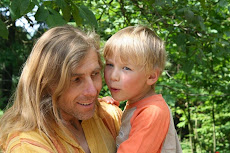
So please, Globe and Mail, don't reduce this to an article about homesteading. There are people all around making brave and original choices. They're not all rural farmers, not all long-haired Waldorfian liberals, and certainly not all as brazenly public as I've chosen to be. The idea of radical homemaking is so much more than where we live or what we eat - it's how we try each moment to live with integrity, how we can look ourselves and our neighbours and our as-yet-unborn great grandchildren in the eye and say that we are doing our best to live up to what we believe to be a Right and Fair and Sustainable and Joyful way for us all to share this world.

Mar 10, 2010

The Teacher Whisperer

Tonight all 17 parents of next year's grade one class gathered to "call" the new teacher. We lit candles and spoke reverently of what qualities we hope this new person will embody as he or she guides our children for the next 8 years.

That's right, 8 years. In Waldorf education, teachers stay with the same class from grades 1 to 8. They develop deep, lasting relationships with each child, understand the dynamics of their particular group, learn patterns and detect growth and blockages in each individual child. They become one of the most significant individuals in that child's world. At the closing ceremony last year the 8th graders were openly weeping as their beloved teacher wished them well on their high school journey.

If Zekiah's gonna be with this teacher for 8 years, the hiring committee better get it right, right? But the most powerful thing I felt tonight was a deep shared trust in the philosophy and system we have entered. We did not demand 10 years experience or advanced degrees or any particular expertise. We just asked that the teacher genuinely love our children, hold their best interests at heart, and be committed to a course of lifelong learning for the children, parents and him/herself.

The two kindergarten teachers present will be part of the hiring committee, ensuring that our views and their own understanding of our children will be honoured during the process. It will not be a matter of hiring the best person, but the best person for this unique group of children and families. What a privilege to have any part at all in the choosing of our child's teacher.

When I asked Zekiah what he hoped the new teacher would be like, he simply said he wanted Mr Wilt, the outgoing 8th grade teacher who we hope will apply for the position. "He's the nicest teacher in the school," Zekiah explained. "Galen told me."

"And do you know how I know?" continued Galen. "Because all his students are happy."

If the person we psychically called upon tonight can have that effect on my child (especially my 8th grade child!), I'll say this was a night well-spent.

Mar 8, 2010

Good fences make good neighbours

There's alot to be learned from building a fence. A true right of passage for a homesteading man. A statement of permanency and purpose, of stewardship and commitment. A legacy of security, strength, bulging biceps and aching shoulders.

You learn about power. Two-plus days of pounding fenceposts by hand, building strong corner braces, pulling and nailing wire mesh, hanging the gate - what a glorious way to greet the spring. When I speak of it my wife notes a proud, alive gleam in my eye that's not there after the average late-night grant-writing sludge. It's the raw, physical dominion and union that is an elemental turn-on.

You learn who your friends and neighbours are. Friends like Trent who shows up with two loads of fenceposts, and Joe who works far later into the twilight than his body tells him to (and who shows up at 9:30pm a few nights later to help herd the cows back inside and repair the section of fence we didn't do so well). Neighbours like Bob who's so pleased he's offering to either help pay or (hopefully) to give us some of his old beekeeping equipment. And neighbours like Fran who makes us create a new fence parallel to hers but 2 feet apart so that we don't mess up "her" posts. Same fence, very different reactions.

You learn the power of man to change the environment to his own whims and needs. I made an arbitrary decision to give more space to kids and less to animals. We ran the fence straight across the field rather than following the contour of the base of the hill, instantly creating a huge play area on one side of the iron curtain and pasture on the other. Over time the cows will mow and trample fertilize one side while kids and I mow and trample and don't fertilize the other side, slowly and deeply redefining the land as well as its usage.

You learn history, past and evolving. Somewhere in the Old Testament (Leviticus?) farmers were encouraged to "cut corners", leaving the very edges of their fields unharvested so that hungry peasants and travelers could eat. These days, cutting corners is a negative - doing things on the cheap - and the current social concern when laying out a field is the idea of placing the fence 10 feet shy of the property line as a "wilderness corridor." 3400 years later, same fence placement, different priorities.

And most touching, you earn the deep gratitude of those big brown-eyed, trusting beasts who'll be this fall's burgers. When set free in their new pasture they bucked and jumped (literally) for joy, then came over to nuzzle me and kiss my hand (again, literally). Wildside Farm will be selling the best-tasting grass-fed beef in the valley this summer, in no small part due to the fact that these cows have felt safe and loved. There is some scientific explanation about them not releasing stress hormones, but at a cosmic level we'll just be tasting the love.

Unlike Robert Frost (excerpt from Mending Wall below), we do indeed need a fence to give our cows healthy freedom within safety in their short life, and for the sheep who will next season take their place. But I plan to build a stile so Bob can hop over and chat while we poke around the bee hives, and I dream of someday breaching the double-barrier between us and Fran. Something there is that doesn't love this wall between us, that wants it down.

...'Good fences make good neighbors'.
Spring is the mischief in me, and I wonder
If I could put a notion in his head:
'Why do they make good neighbors? Isn't it
Where there are cows?
But here there are no cows.
Before I built a wall I'd ask to know
What I was walling in or walling out,
And to whom I was like to give offense.
Something there is that doesn't love a wall,
That wants it down.' I could say '.Elves' to him,
But it's not elves exactly, and I'd rather
He said it for himself.